Thursday, March 8, 2012

Assignment 13

MY SUGGESTION:

My suggestion is that, there should be two attendants entertaining the customer, one attendant will check if the item is usable and good to use and the other attendant tells the customer on how to use the item and also it tells about the terms and condition of the store.


USE CASE DIAGRAM


DATA FLOW DIAGRAM

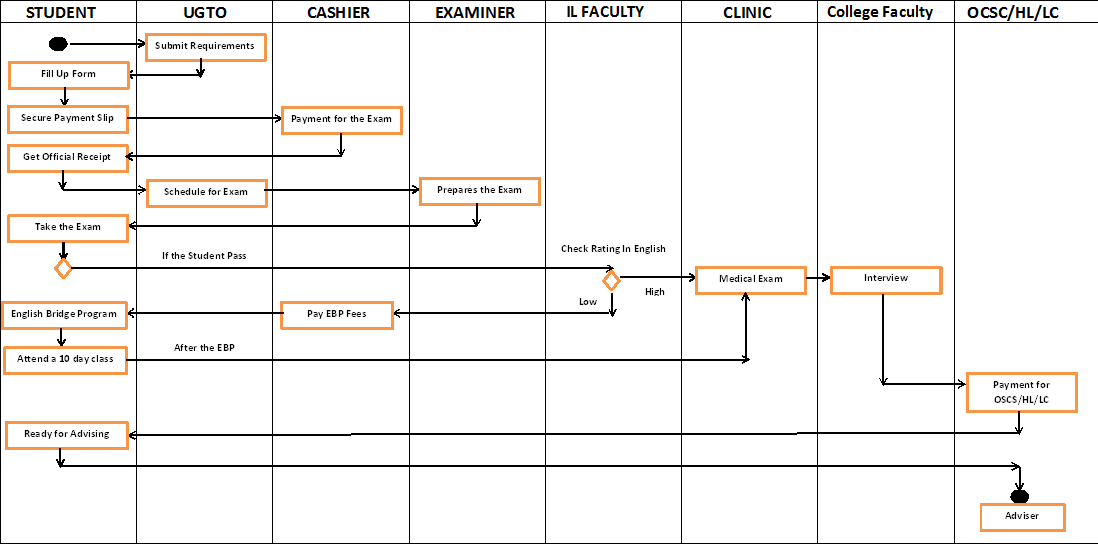
ACTIVITY DIAGRAM


Thursday, February 23, 2012

Assignment 12

What is ERP?
It describes how different and advanced business software can be developed to create a shared database across multiple business units.  The idea was to maximize synchronization throughout the organization, thereby improving processes, performance metrics, and ultimately business performance. 
Sample Organization that Implements ERP
Philips Medical Systems
            Is a leading global manufacturer of a wide range of diagnostic imaging, monitoring, and other equipment to customers in more than 100 countries around the globe.
Activities
In the 1990s, the company set an ambitious goal to transform its information systems so that they could support agile new business models and maintain a strong focus on customer satisfaction. At the time, Philips Medical Systems had a highly distributed business – factories on different continents, dozens of sales offices, support and spare parts centers in 30 countries – that used more than 50 different systems. The initial business integration strategy was based on an internally developed, point-to-point integration that transferred data each night. When immediate information was required, personnel had to know which system to log on to, access that system directly, and then enter the data manually – sometimes even multiple times – to be able to retrieve the information. According to Reinier Lodewijks, manager of global application integration at Philips Medical Systems, this mishmash of architectures was “a classic spaghetti problem” that demanded a radical new approach to integration. If Philips had used the original point-to-point integration approach, it would have required more than 3,000 separate interfaces to obtain a fully integrated business model, which would be highly costly and complex.
ERP System Used (SAP R3)
            According to Wikipedia, SAP R3 is the former name of the main enterprise resource planning software produced by SAP AG. It is an enterprise-wide information system designed to coordinate all the resources, information, and activities needed to complete business processes such as order fulfillment or billing.


Applying ERP Management
Enables Real-time Information Flow
Business integration solution empowers business processes with real-time information flow and verification of the accuracy of all data entering the network. These capabilities are vital to the company’s relationships with healthcare providers. For example, when a hospital urgently needs a replacement part for a piece of medical equipment, requests and confirmations immediately zip across the network to place, fulfill, and settle the order. No more silos of information and slow communication. In fact, this improved data exchange was accompanied by an overall reduction in network traffic.
Accomplishes Massive Integration with Ease
            It enables the rapid integration of new applications during implementation and will make the process equally simple in the future. , Philips could more quickly unify its own business processes with those of the newly acquired companies so as not to miss a beat in delivering to its customers.
New Integration Strategy
This approach will make it possible to roll out new application integration projects in mere days. As a result, Philips further reduces its development costs while maximizing the flexibility of its IT architecture
Comparison to SDLC
            ERP and SDLC differ in many ways, for example, some of the ERP features like it facilitate company-wide Integrated Information System. ERP performs corporate activities and increases customer service. According to some of the study that ERP is the best solution for better Project Management compared to other planning tools, addressing not only the current requirements of the company but also providing the opportunity of continually improving and refining business processes and above all, and provides business intelligence tools.
            

Thursday, February 16, 2012

Assignment 11

Introduction

In this article I am about to briefly describe the characteristics that an analyst examines when choosing or defining deployment environment, but before that I will tackle about what is deployment environment.

Application deployment environment is the arrangement or formation of computer hardware, system software and the networks in which new system will operate. It also controls limits imposed on system development alternatives. So it simply means that in examining or choosing the deployment environment, I as analyst must first understand the hardware’s and software’s being used by the university.

Characteristics of an Analyst When Examining and Choosing a Deployment Environment

Consider the Configuration

                It is important to consider the configuration, in order to know the limitations of the computer specially its structure and also to know the compatibility of computer software’s and computer hardware’s, in order to have good performance; these configurations are the specifications of the computer.

Define the Environment

                It is important to define first the environment in order to know what the applications that will match to the environment are and in order to have multiple environmental choices.

Planning

                In the enrollment system, I as an analyst need to plan well on how to interconnect all the departments that are involve in the enrollment in such a way that this department will unite and cooperate well with each other.

Determining the Alternatives

                It is very important to have alternatives in order to have possible solutions on how to develop and enhance the system.

Security Issues

                I as an analyst must make sure that the security of the system is reliable, the system must use only by the one responsible of using it.

Cost and Schedule
               
                It is important to determine the cost and the time to build the system, in order for the client to know how much money will be involved and to know the running period of the sytem.


Conclusion
               
                To sum it all up an analyst must understand all the things that is related to the system, for example, the computer hardware’s, the people around the system, the possible solutions in order to enhance the system and most importantly an analyst should consider the deployment and development environments together when determining their fit to a particular application.


Thursday, February 9, 2012

Assignment 10

In this article I will tackle about what characteristics does an analyst examine when evaluating a DFD quality.  In our previous assignments we are assigned to make a Data Flow Diagram. But before going to the point I will discuss first what a DFD or Data Flow Diagram is and what are its qualities, the steps in creating a Data Flow Diagram and the symbols of a data flow diagram.
What is a Data Flow Diagram?
A DFD or a Data Flow Diagram is a graphical representation that portrays information flow and shows the transforms that are applied as data move form input to input. In other words Data Flow Diagram is a geographical tool that shows, process, flows, stores and external entities in a system. Data Flow Diagram shows the transformation of data into a system. The basic form of Data Flow Diagram is also known as a data flow graph or a bubble chart. The data flow diagram may be used to represent a system or software at any level of abstraction. In fact, DFDs may be partitioned into levels that represent increasing information flow and functional detailed. Therefore, the DFD provides a mechanism for functional modeling as well as information flow modeling. In process flow diagrams, process symbol has got the following entities, process number which tells the number of process, and locality where activity is happening and also the process name. According to some information Data flow diagram process symbol rules symbolize the transformation data. There must be a data flowing into/out of the process. Data Flow Diagram is categorized as either logical or physical. A logical DFD focuses on the business and how the business operates. It describes the business events that take place and the data required and produced by each event. On the other hand, a physical DFD show how the system will be implemented as we mentioned before. Ideally, systems are developed by analyzing the current system and when we add the new features to the new system  the DFD will be used is the logical type but finally the best methods to implement the new system should be developed using the physical Data Flow Diagram.
Symbols of a Data Flow Diagram
There are only four symbols used to write the Data Flow Diagram as, this are the symbols:
Process - Rectangular Box
Processes are drawn as rectangular boxes; processes are transformations, changing incoming data flows into outgoing data flows. Rectangular boxes has a descriptive name occupying the middle of the box and also it has a top stripe that contains the identification number in the left and the location or the role carrying out the work on the right, this is optional and used only in the current physical DFD.
Arrow Headed Lines – Data Flow
Double headed arrows can be used (to show two-way flows) on all but bottom level diagrams. Furthermore, in common with most of the other symbols used, a data flow at a particular level of a diagram may be decomposed to multiple data flows at lower levels.
External Entity – Bubble (circle or round corner square)
An external entity is a source or destination of a data flow which is outside the area of study. Only those entities which originate or receive data are represented on a business process diagram. The symbol used is an oval containing a meaningful and unique identifier.


Data Store – Narrow opened rectangle
A data store is a holding place for information within the system: It is represented by an open ended narrow rectangle. Data stores may be long-term files such as sales ledgers, or may be short-term accumulations: for example batches of documents that are waiting to be processed. Each data store should be given a reference followed by an arbitrary number.
According to some information these are some of the elements of a Data Flow Diagram.
Resource Flow
A resource flow shows the flow of any physical material from its source to its destination. For this reason they are sometimes referred to as physical flows. The physical material in question should be given a meaningful name. Resource flows are usually restricted to early, high-level diagrams and are used when a description of the physical flow of materials is considered to be important to help the analysis. 
Data Stores
In some of the information, the store should be given a reference letter, followed by an arbitrary number. These reference letters are allocated as ‘D’ that indicates a permanent computer file, ‘M’ that indicates a manual file and ‘T’ that indicates a transient store, one that is deleted after processing. Most important thing is that in order to avoid complex flow, the same data store may be drawn several times on diagram. Multiple instances of the same data store are indicated by a double vertical bar on their left hand edge.
Processes
When naming processes we should avoid glossing over them, without really understating their role. Indications that this has been done are the use of vague terms in the descriptive title area - like 'process' or 'update'. The most important thing to remember is that the description must be meaningful to whoever will be using the diagram. 
External Entities
It is normal for all the information represented within a system to have been obtained from, and/or to be passed onto, an external source or recipient. These external entities may be duplicated on a diagram, to avoid crossing data flow lines. Where they are duplicated a stripe is drawn across the left hand corner, like this. The addition of a lowercase letter to each entity on the diagram is a good way to uniquely identify them. 
Characteristics of an Analyst in Examining a DFD Quality
                This time I will tackle about what are the characteristics an analyst should developed or should have in examining a DFD quality. After defining what a DFD is, what the steps in making a DFD are or how to create, what are the symbols of a DFD and what are its qualities, I came up with an answer that an analyst should have an interest of what he/she is doing because no one can successfully make a data flow diagram if he/she does not have an interest because we can make the diagram if we will have an interest in making it, another characteristic is an analyst should be observant. Being a good observant is one of the best characteristic an analyst should have in making DFD because when we observe well the flow of the system of the company we can make the proper and the appropriate DFD for it, by observing we can surely tell whether this man is in this kind of work or what are the different roles of the people in the company or in the system. Another important thing is an analyst should make sure that the DFD is understandable to the people, because it is very important that a DFD should be clear to the people around the system in order for them to know the process and the flow of their system well and also they must be able to understand the actual movement of the system and how the model describes it. An analyst is requires also to accept proposals or corrections in order to know the ideas of the people that are being surrounded in the system. Another important thing is an analyst should generate the maximum solution of the problem, he/she must be able to explain the logic solutions, and also an analyst should always evaluate the data flow diagram for accuracy or perfection and the most important thing an analyst should develop is he/she must willing to communicate to the people writing or orally, he/she must get along with them and he/she must be a good listener in order to feel the reaction of the people. And according to my article or according to my previous assignments, an analyst is not expected to be good in the aspects of programming, the most important thing is he/she must have a general knowledge in the concepts and terms and the essentials of the system. And most importantly an analyst should be business minded.
Conclusion
                To sum it all up or to generalize what are the characteristics of an analyst in examining a Data Flow Diagram quality. He/she must have a good background of what are the systems that existed and he should also be able to identify what are those processes that a system must have with regarding to the goals of the organization. And he must have enough background on what is their business processes. Good communication skills as well as good critical thinking. And also an analyst must gather important information in order to have sufficient information in making a DFD. And lastly, being able to adapt to change, as we all know we are in the fast changing world or era. Well, that’s it. These are the characteristics that a good system analyst must have in order to evaluate the Data Flow Diagram quality.

Thursday, January 26, 2012

Assignment 8


USE CASE: REQUIREMENTS.
ACTORS: Student
BRIEF DESCRIPTION: The student should prepare all the requirements needed.
PRE-CONDITION: The student should secure all the requirements.
POST-CONDITION: The student is ready for passing the requirements at the UGTO.
Triggered Event: If the student wants to enroll at USEP.

USE CASE: ADMISSION
ACTORS: Student, UGTO
BRIEF DESCRIPTION: The student will go to UGTO for the application form and fill it up.
PRE-CONDITION: The student will give the requirements.
POST-CONDITION: The student will now pay at the cashier for the examination.
Triggered Event: The student wants to take the exam.

USE CASE: SCHEDULE and PAYMENT FOR ENTRANCE EXAM
ACTORS: Student, Cashier
BRIEF DESCRIPTION: The student will pay at the cashier. 
PRE-CONDITION: The student will pay the cashier and get the receipt.
POST-CONDITION: The student will get the schedule of the Exam at the UGTO.
Triggered Event: The student will get the schedule of the exam.

USE CASE: EXAMINATION
ACTORS: Student, Examiner
BRIEF DESCRIPTION: The student will take the examination.
PRE-CONDITION: The student will take the exam given by the examiner.
POST-CONDITION: The student will get the result.
Triggered Event: The student will take the exam and get the result.

Use Case: ENGLISH BRIDGE PROGRAM
ACTORS: Student, Institute of Language (IL)
BRIEF DESCRIPTION: The student will take the EBP if he/she has a low rating in the English part of the exam.
PRE-CONDITION: The student will take the English Bridge Program conducted by the Institute of Language.
POST-CONDITION: The student is now ready to take the medical exam.
Triggered Event: The student will take a 10 day class or the English Bridge Program.

Use Case: MEDICAL EXAMINATION
ACTORS: Student, Clinic
BRIEF DESCRIPTION: The student will take the medical examination.
PRE-CONDITION: The student will take the medical exam conducted by the clinic.
POST-CONDITION: The student is now ready for interview.
Triggered Event: Taking the medical examination.

Use Case: INTERVIEW
ACTORS: Student, College faculty
BRIEF DESCRIPTION: The student is now ready to take an interview conducted by the interviewee at the college faculty.
PRE-CONDITION: The student will present all the requirements for the interview.
POST-CONDITION: The student will pay some other fees.
Triggered Event: The student will have an interview.

Use Case: OSCS/Headlight/Local Council Fees
ACTORS: Student, OCSC, Local Council, Headlight
BRIEF DESCRIPTION: The student will pay the payments at the OSCS/Headlight/and Local Council
PRE-CONDITION: The student will pay at the OSCS/HL and LC in order to complete the requirements needed for advising.
POST-CONDITION: The student is now ready for advising.
Triggered Event: The student will pay for the preliminary payments.

Use Case: ADVISING
ACTORS: Student, Adviser
BRIEF DESCRIPTION: The adviser will check the requirements and if it is complete the student is ready for advising.
PRE-CONDITION: The student will get the PRF at the adviser.
POST-CONDITION: The student is now ready for enrollment.
Triggered Event: Prepares the student for the enrollment.

Thursday, January 19, 2012

Assignment 7


Use Case: Admission
Actors: Student & UGTO
Description: The student must submit all the requirements of the school and get the application form

Use Case: Taking the Examination
Actors: Student, Cashier & UGTO
Description: The student will pay for the examination fee and get the schedule for the exam and take the examination and after that the student will wait for the exam result

Use Case: Clinic
Actors: Student & Clinic
Description: The student is required to take their medical exam at the clinic

Use Case: Interview
Actors: Student & College Faculty/Adviser
Description: The student will undergo an interview conducted by the college faculty or adviser

Use Case: English Bridge Program
Actors: Student, Cashier & Institute of Language Staff
Description: If the student got a low score in English, the student will undergo a 10 day class or the English Bridge Program given by the staff of the Institute of Language

Use Case: Preliminary Payments
Actors: Student, OSCS, Headlight, Local Council
Description: The student is required to pay the preliminary payments at the OSCS, Headlight and the Local Council

Use Case: Advising
Actors: Student, Adviser
Description: The student will go to the adviser for advising.

Thursday, December 22, 2011

Assignment 6


 In this article I will tell about the conversation between two persons, John Juan the systems professional and Peter Pedro the manager of the department targeted for a new information system which John Juan will be working with. In this article I will try to analyze which of them should I sympathize most and I will try to to find a solution or method in their problem.
As I’ve understand in their conversation, John Juan is insisting that they should first analyze or examine the existing system the company has, then they will review the document and also observe all the employees on how they perform their task and then John Juan will determine all the possible aspects that is still OK and gather all the important data that can be preserved, but Peter Pedro is worried because they’ve been to this kind of projects before but they still got failed because as John Juan was insisting, Peter Pedro said that this kind of technique will just put them to failure because as Peter Pedro experienced before, they didn’t get a new system as promised but instead they get a modified version of the old system. John Juan promised to Peter Pedro that this will not happen, they just want to have a thorough understating to the existing system, they like to know what is working well and what is isn’t but Peter Pedro said that he is much comfortable if John Juan will analyze what really is the problem of their company, then John Juan will list it and it will serve as the requirements of the system and also Peter Pedro said that John Juan should determine what will be the purpose of the program to their department, then after doing this, John Juan and his team as Peter Pedro said will salvage or save the possible portion of the system that can still be save, because Peter Pedro doesn’t want that they will be force to use the old system of their department. Obviously these two professionals have different views on how the analysis phase should be conducted, for me their views have two sides, the negative and positive sides. Let’s talk first about the positive side of John Juan’s views, for me examining first the old system is the best way to gather some important information regarding to the capabilities of the system, being a systems analyst is that you should analyze first the existing system before creating a new one, and also the positive side of the views of John Juan is that it is right to review all the important documents and then observe the employees on how they do the task, being a systems analyst John Juan is doing his task well but for there is a negative side of John Juan's views, being a systems analyst is that you should understand well the needs of the client. In case of John Juan, he is insisting that they should preserved the old system and instead of making a new system they should modify it. And to the views of Peter Pedro I can say that it has a negative and a positive side also. For me Peter Pedro's views is correct also because he is the client and he is the one that has many experience regarding the works of the system and he is the one also who knows how their employees used the system and I understand the point of Peter Pedro on making a new system instead of a modified older version of the system, but on the negative side Peter Pedro doesn't understand well the views of John Juan, although Peter Pedro is the client and has many experience on their company, but we cannot deny the fact that John Juan is a systems analyst and he knows so much about this kind of job. And also being a systems analyst I agree with John Juan that they should preserved what can be preserved. But I agree also with Peter Pedro because by preserving some of the data from the older version, they can still have a modified version of the old system but not a new one. So to begin with the first question regarding whom do I sympathize most, I must explain first what is a systems analyst and what are the roles or skills of the systems analyst.

What is a Systems Analyst?
We all know that System Analyst is the one that investigates and analyze the existing system or the possible system an organization could have. System Analyst is the one responsible in making the plan strategy more capable of making the project being effective and efficient. As we know the major role of a System Analyst in a project team is System Analyst works primarily for an information system. System Analyst should interact with other people because it is the only way that they would know the capability of their employees. We all know that a System Analyst is expert in computer and System Analyst is very professional in investigating different kinds of situation.
Skills on being A System Analyst

As our lesson goes further, I learn that being a System Analyst is not an easy job. Being a system analyst, you should learn how to talk to the people and know what are their needs and concerns. Being a System Analyst is that we all should research, plan, coordinate and recommend other software’s that will help or meet the organizations requirements. System Analyst has so many things to do, some of them are writing technical or methodological requirements from a critical phase, and also after that, System Analyst should cooperate with the designers or developers in order to fix and avoid system bugs. System Analyst is the one capable of testing the system, and it is also the one that deploys the system and determines the flow of the system.
The Three Major Skill of A System Analyst
  1. Technical Skills
    When you are a system analyst you should be able to become a technical type of person, it simply means that you should know about computers, you should also know the easiest part of the computer that is very useful of becoming a system analyst and also the knowledge of computer in terms of peripheral devices(hardware), communication networks and connectivity, database and database management systems (DBMS), programming languages ( for example, VB.NET or Java), operating systems and utilities, software productivity packages, integrated development environment (IDEs) for programming languages, and CASE tools, testing documentation support, reverse engineering, configuration management, project planning, system analysis, systems design, database design, network design, construction, implementation, systems support.
  2. Business knowledge and skill
    A Systems Analyst’ most important task is to solve business problems, thus he/she should know the business functions performed by the organization. Some of these are:
    •Business functions performed by organization
    - It is one of the important task of a system analyst is to know the business functions performed by the organization, for example it is important to know what kinds of business functions an employee is doing, because it enables the systems analyst to analyze well what is the function the system lacks.
    • Strategies, plans, traditions, and values of the organization
    - Being a systems analyst is all about investigating the current system of some organization in order to improve it for the greater good of the company. A systems analyst, should know all the plans or goals of the organization because it is the most important job of a systems analyst to know what he/she is working on and also by knowing the strategies and the traditions of the organization will help him or her to find the best way in improving the system used by the organization.
    • Organizational Structure
    - In starting an investigation, a systems analyst should know the organizational structure because it enables the analyst to be more precise and accurate of what he/she is doing. Organizational structure serves as the flow chart of an organization.
    • Organizational management techniques
    - Organizational management is the lifeblood of any company or group. Being a systems analyst, it is important to know the lifeblood of the company in order to understand well what the needs of the company are. OMT is the methods used to manage the company's daily activities, motivate employees to produce at a high level and guide the company's future path, by knowing all these a systems analyst can simply determine what is the thing that the people in the organization wants. Understanding successful organizational techniques are important to effective management. The first thing to keep in mind is that it helps to understand multiple methods to the several techniques so the approach can be adapted for any given situation.
    • Functional work processes
    - It is important for a system analyst to know the whole process done by organization or the business flow and the different functions happening because as I’ve mentioned earlier it enables the systems analyst to analyze well what the system really lacks.
  3. People Knowledge and Skills
A systems analyst need to understand important things regarding the people. Some of these are:
Think
- It is very important that a systems analyst should know what do people are thinking because it will help or it is a guide to know what does the people really wants and a systems analyst must understand what their needs are.
Learn
- It is important that a systems analyst should learn from the people around because learning in line with teaching the people to will create a good bond to the system and the people using it.
React to Change
- It is important that a systems analyst would realize that the people will surely react to the change, and a systems analyst must analyze well the system and make sure that the system can be easily adopt, it is the role of a systems analyst to realize that.

Communicate
- A systems analyst must communicate well to the people because it will help an analyst to gather more information and the people will have a trust to tell all the data he/she needs from them, and also by communicating well, an analyst can understand the complexity of the employees doing. It is important to make sure that an analyst must be good in communicating in order to motivate people and also provide necessary support
Work
- An analyst should know what kind of work the people are doing in order so that they can easily adapt to the changes.
After discussing about what is a systems analyst and what are the skill and roles of a systems analyst, I came with a decision on whom I sympathize the most. In my opinion I sympathize the both of them but I sympathize the most is John Juan, because John Juan is just doing his job, even though Peter Pedro has more experience about their system but as I reviewed about what is the systems analyst, John Juan is just doing what a systems analyst should be doing. In John Juan's point what he wanted to do is to examine first the old system and try to recover the important features of the system that can be preserved and can be useful to create a new system. What John Juan was pointing is that he just wanted to get the information from the old system so that he can analyze well the needs of the employees, He is just trying to explain that in the old system maybe they can find something useful in their study and so they can insert it to the new system they will create, but Peter Pedro does not understand John Juan's point, although I understand Peter Pedro, because he is just afraid of the plan of John Juan, because he experienced it before, instead of making a new system, they got a modified version of the old system, but as I've understand that John Juan will make a new system, he is just gathering some important details and he is observing the works of the employees and how do they use the system. I sympathize also with the point of Peter Pedro, because he wants to make a new study of what are the needs of the system and it will serve as their requirements to create the new system but I think John Juan has a better idea because I think John Juan is just using the most used method of being a systems analyst which is the waterfall method. Let me discuss what is the waterfall method.
What is the Waterfall Method
The waterfall model is the earliest method of structured system development, nowadays this model is still widely used even though in the recent years It has come under attack for being too severe and impractical when it comes to meeting customer’s needs. It is most closely resembles a “generic” model for software development. According to some study waterfall model is a sequential design process, often used in used in software development process, it is called a waterfall model because as it seen that its progress if flowing steadily downwards life a waterfall. In 1970 up to now it has become the fundamental model for software development in many software companies. This model was introduced by Winston W. Royce. As I’ve understand waterfall model has its personal feature that sets it apart from other software development models, this feature is, waterfall model does not allow a simultaneous execution between phases, it simply means that a second phase cannot be executed when the first phase in not finish, this kind of approach is easy to implement and there is transparency in every stage. Systematic documentation is done at every phase of waterfall model. To verify whether the development process is on track and meets customer’s requirements, review meetings are conducted at the end of every stage. The waterfall model consists of the following steps; these are problem definition, feasibility study, requirement analysis, system design, coding and testing, implementation, and system maintenance. In Problem Definition Phase ,this is where we define the problem, it is not an easy job because defining the problem is more likely solving the problem, because when you find what really is the problem we can find the right solution for the problem, this phase requires a critical thinker that has the ability to think what really is the problem, identifies what is the characteristics of the problem. In Feasibility Study Phase, it aims to accurately and logically uncover the strengths and weaknesses of the existing business or proposed venture, opportunities and threats as presented by the environment, the resources required to carry through, and ultimately the prospects for success. In its simplest term, the two criteria to judge feasibility are cost required and value to be attained. In Requirement Analysis Phase, this is the phase of the waterfall model which includes a meeting with a customer to understand his/her requirements, in this phase an analyst must perform a full and complete analysis to the current situation of the customer. This phase also refers to the gathering of system requirements; an analyst should gather all the important requirements with the goal on determining how these requirements will be accommodated in the system. In System Design Phase, this is the phase where the designing of the system takes place. This explains why the waterfall model has a unique feature because you cannot proceed with the designing if you are not finished with analyzing. Once the requirements have been collected and analyze, it Is necessary to identify in detail what should be the design of the system or how the system should be constructed in order to perform necessary tasks, the main objective of the system design phase is to focus on the data requirements for example “what information will be processed in the system?” it is focus also in the software construction for example “how will the application be constructed?” and also it is focus in the interface construction for example “what will the system look like? What standards to be followed?” In Coding and Testing Phase,this is the phase where the analyst is not capable of doing. This is the time when you gather all the needed information from the start up to this, this time the programmer takes place. In coding the programmer is the one capable of doing, after understanding all the gathered information the programmer converts this information into a machine readable computer code. In the Implementation Phase, this phase is the realization of the application; it is the time when the developer executes the plan, and ideas. According to some study it is a realization of a technical specification or the realization of a technical description or algorithm as a program, software component, or other computer system through programming and deployment. In the Maintenance Phase, this is the final phase of the waterfall model the maintenance phase, in this phase the developer checks the processes made by the system from time to time. He/she will update the system if it has some errors or bugs.
Proceeding with the next question about what is the method would I propose that they should take. In my opinion they could use the usual method, all they need is understanding. For me they should plan first what should really be the problem of the system, they should understand and know all the possible problems that they could encounter and next is that they should analyze the problem well if they can analyze the problem well they can get a better solution to it, and also John Juan should understand well Peter Pedro, he should explain well what he was doing. I think the best solution to their problem is that they should combine their ideas for example John Juan will examine the old system but he should still find a new way or new requirements in making a new system, then after that they should ask the employees what are things that is lacking in the system and what should be out in the system after doing this they design a new system that fits their needs.
Conclusion
To sum it all up, for me their conversation is not about quarreling, it is just about a two experts, expressing their ideas to make an efficient and effective system, the two of them has a point on their views, Peter Pedro wants a new system and also John Juan but John Juan wants that they should examine first the old system and if they find something useful they can insert it to the new system. As I've observed good communication is the most important way to have a good relationship between the client and the analyst. An analyst should develop good communication skills in order to communicate well with the client.

Tuesday, December 20, 2011

Assignment 5

In this article my goal is to know how the life cycle is develop specifically in the university, I was wondering at first what is the life cycle of the university, but As I’ve understand it is all about the life cycle of the systems that our university develops so that’s why I should discuss about the SDLC or Systems Development Life Cycle and then the vision mission goals of the school and the systems develop by our school.
Systems Development Life Cycle
When we say life cycle of the system, we talk about the SDLC or systems development life cycle. Systems Development Life Cycle is the cycle of the system that every analyst follows, there are five stages of Systems Development Life Cycle; these are project planning, analysis, design, implementation, support, when we say planning the analyst initiates the problem, the analyst plan for the possible problem, and also the analyst ensures feasibility, and also the analyst makes a plan schedule in order to arrange the works that they will do, and also involves in planning is the approval of the project or to obtain the approval of the project, to sum it all up in planning an analyst plans for the possible work to do, the analyst assigns different task to its co analyst, the analyst makes a schedule so that the amount of work will be divided and also the work will be organize. The next stage of Systems Development Life Cycle is the analysis, when we say analysis the analyst understand business needs and processing requirements, it simply means that the analyst analyzes the problem of the system, the analyst provides an investigation to the system in order to obtain the needs of the system, the analyst looks for some requirements needed in order to have an effective and efficient system, and also conducts an interview to the possible users of the system, it will serves as a guide to the analyst, in order to know well the things that the system and user needs, in this stage the analyst will have a good relationship to the users, this stage is the most difficult stage because analyzing the problem well or knowing what is really the problem will help the developer to do the right solution to the problem. The third stage of the SDLC is the design, in this stage the analyst is no longer need, it is time for the developer. When all the data that are gathered by the analyst, it is the time for the design stage, this is where they define the solution based on the requirements and the analyst decisions, it simply means that in designing the system the developer designs for the right interface of the system, the developer designs the system based on the studies gathered by the analyst and also the developer designs it based on the requirements the client wants and also based on the users, in this stage the developer designs only the system the will not implement it yet. The fourth stage of the SDLC or Systems Development Life Cycle is the implementation, after the developer designs the possible interface of the system it is time for the implementation of the system, implementation is the stage where the users of the system are involved because it is the time to install the system, teach the users how to use it, it is the time to construct the system, in other words implementation is the final stage in case of building the system because this is the stage where the system is fully operational, it is the time when the users use it, and also it is the time when the systems will be observed and tested. The final stage of the SDLC or Systems Development Life Cycle is the support, when we say support it is like maintenance, support to the system, this is where the developer keeps the system and running, after building the system the developer observes for the possible errors and bugs of the system, this is the support stage, the developer will keep improving the system until it gets the final output that has no bug s and errors. To sum it all up SDLC is very important and analyst still uses it until now.
My School
                My school is the USEP or University of Southeastern Philippines, it is the university located at the southeastern part of Mindanao, and our university aims to be the premiere university in the ASEAN region. Our school visualizes that is should be the center of excellence and development that is responsive or reactive to fast changing environments, and our school also wants to be the leading university in the country that fosters innovation or invention and applies knowledge to create value towards, social, economic and technological developments. Our school has a mission of producing a world-class graduate and relevant research extension, it means that our school will have a good graduate that has a contribution to the society, and In order to achieve this, the school will provide quality education and sustainable resource management. Particularly our school is devoted to provide quality education for students to grow in knowledge, and to be better especially in technological aspects and also our school is committed to promote our well-rounded development and make us globally competitive in the world of work and help us to be independent when the time comes. Our school is committed also in engaging high impact research, not only for knowledge’s but also for its particular benefits to society and the USEP is committed to promote entrepreneurship and industry collaboration, aligned with the vision and mission of USEP our school has goals also these are; USEP will produce globally competitive and morally upright graduate, USEP shall develop a strong Research, Development and Extension culture with competent human resource and responsive and relevant researches that are adopted and utilized for development. Our school has a total of seven thousand plus students most likely the number of girls is higher than the number of boys. Our school is a state university, it is the cheapest school in Davao but the most standardized school and the most strict school in Mindanao.
                The main system that is developed in our school is our enrollment system; we all know that this system is present on all schools. As a student in the University of Southeastern Philippines I am very familiar with our enrollment system, although this system is not perfect for me but our enrollment system is much faster than in the past years, the steps of our enrollment system is first a student is required to provide a cleared clearance , this will enable the student to proceed to the enrollment and also the student must get all the subject grades form the previous semester and after proceeding to the proper enrollment the student is require to pay for the minor fees such as OSCS fee, headlight fee and our local council fee, and after paying this minor fees, the student will go to their respective adviser for the advising part, this is where the adviser analyzes the students grade and this where the adviser tell the students whether they can take this subject or not, this is where the student will get its PRF or Pre Registration From, PRF is where the subject of the students is listed, when the adviser finished listing the subject of the student the student will get the schedules of the subject he/she is allowed to and then after that the students will go back to the adviser and the student will get the advisers signature then after that the student will go to their respective councils for encoding, in encoding the students subject will be encoded to the registrar’s copy but the student is not yet enrolled, after the encoding process is where the most tiring process, this is where the students go to the cashier to pay the enrollment fee, this is the process where all the students lined up, imagine 7000+ students will be enrolling, sometimes the line in the cashier goes up to the second floor of our building because of so many students paying their bills, this is one of the problem of our system, the line that is too long, it has not been solve for so many years up to now, after the students pay his/her bills at the cashier, it is the time for the last stage of the enrollment and it is the most tiring part because there are so many students lining up, this is the time for the registrar’s office, this time the student will represents all the receipts including the OSCS fee, headlight fee, the local council fee and specially the enrollment fee receipts, in the registrar the subject that are encoded at the encoding office will be validated, after validating the subject the students is now officially enrolled, but the steps above is almost similar to the scholars, the different is the scholars has a different window at the cashiers office this is the students account, in the students account the students will be checked whether they are still scholars or not but before going to the students account the scholars need to go to the OSS, this is where they will get a sign representing that they are scholars and this sign is the only proof at the students accounts that the student is still a scholar. The steps above is only for the old students but for the new students it takes a long process because first the students is required to have an entrance exam result and in the entrance exam if the student does not pass the passing grade for the English subject, the student will have to undergo English Bridge program, this is a 10 day class with an English Subject only and the certificate in program is useful in enrollment to, this will serve as a proof that a student is enable to take the subject English. The new comer will choose their NSTP, whether the student wants to join the ROTC or the CWTS and the remaining step are mentioned above. Our enrollment system is not a perfect system because of the unwanted lining up of the students. As a student I can described well the problem of our system but I don’t have the solution on how to solve this. Our enrollment will last for a week; it only takes one day for every year level, that’s why I think with such a small duration of enrollment time, the student will lined up and make a long line. The main problem of this system is when the other year level is not finished enrolling in their specified enrollment date; they will go back again and joined up with the other year level. The other system our school has is the online grading system; it is the system where you can browse your grades through internet, this system is a good system because the student can view his/her previous grades from the moment he/she studied at USEP or University of Southeastern Philippines, this system is useful also when you lost your handbook or booklet because all the grades written on your passbook or handbook are all encoded in the system, just by browsing the net you can print this grades and this will serves as a temporary handbook. Online grading system is always updated by the registrar, every time there is changes in the registrar, there is changes also in the online grading system and also our school has a library system too, this system enables a student to find the books in a fastest way, the student will just type the name of the book and the system will give the location where the book is located and also another system our school has is the university logger, it is a system that allows the student to use the computer at our school, it is login system that only the validated library cards are allow to used but this logger is not efficient because a student can still log in without validating the library card or your id number just by simple computer tricks. These are some of the systems our school develops although these are not perfect systems but still good enough to make us technically advance.
How Do You Know That the Life Cycle Was Developed Specifically For the University?
                All the systems that our university has undergo life cycle, analyst in our school analyzes the problem of our systems, it is the main role of the analyst to analyze the system, I think the systems of our school has undergo planning, analyzing, designing, implementation and testing, for example our enrollment system, although this is not a perfect system but some part of it enables the student to have an easy enrollment. The enrollment system our school has, has a good plan in what is the process of our enrollment, it is a good plan to provide so many processing windows at the registrar. Our enrollment has been analyzed well by our analyst, if only the students will not go back and if only if the students can finish an enrollment in one day our system will be perfect. I can tell that the life cycle was developed in our school because as I can see for now it undergoes development and improvement, because our enrollment in the past three years is very different than now, it is much faster and much easier because of the improvement they make.
How Do We Know That It Meets Our Needs for the University?
                In a system there is a client an analyst and a developer and also the user, in our case at school we are the clients, the user are the ones at the office and the analyst and the developer are the one who made the system. Being a client I can tell that it meets my needs, based on my experience at our enrollment system, I am satisfied with the process because it is being planned and analyze well. And I can say also that it meets the needs of the university also, although it is not still perfect because of the unwanted long line, but it only needs development and a proper instruction to the student I know that the one maintaining the systems at our school is doing their best to make an effective and efficient system.
Conclusion
                To sum it all up or to summarize it, systems development life cycle or SDLC is very important in the need of the system; SDLC serves as a guide in building a better system. I also conclude that all the systems at our school undergo planning, design, analysis, implementation and testing. Systems like enrollment system at our school is the best system they develop, but hopefully it will be perfect soon and hopefully someday there will be an online enrollment system at our school like in the others.